
For importers sourcing home hardware — from bathroom faucets and shower systems to wall switches and door handles — understanding quality standards is not optional. It is the difference between a product that builds your reputation and one that generates returns, complaints, or even legal liability. This guide answers the most common questions importers ask about certifications, factory audits, and quality control processes.
Understanding Key Certifications
What certifications are essential for home hardware products?
The certifications you need depend on your target market, but a few appear repeatedly across regions. For Europe, CE marking is mandatory for most hardware categories, confirming the product meets EU health, safety, and environmental protection directives. RoHS (Restriction of Hazardous Substances) applies to any hardware with electrical components — switches, smart locks, sensor faucets — and restricts lead, mercury, cadmium, and other dangerous materials.
In China's domestic market, CCC (China Compulsory Certification) is required for electrical switches, sockets, and certain plumbing fittings. For the North American market, UPC (Uniform Plumbing Code) certification is critical for bathroom fixtures, while NSF/ANSI 61 applies to products that contact drinking water. UL listing is often expected for electrical hardware sold in the United States and Canada.
How do CE and RoHS certifications differ, and do I need both?
They serve different purposes and are not interchangeable. CE marking is a broad conformity declaration covering multiple directives — a faucet might need CE under the Construction Products Regulation, while an electronic switch needs CE under the Low Voltage Directive and EMC Directive. RoHS is specifically about material composition: it limits the concentration of six hazardous substances in electrical and electronic equipment.
If you are importing electrical home hardware into Europe, you almost certainly need both. A switch that is RoHS-compliant but lacks CE marking cannot be legally sold in the EU. Conversely, CE marking alone does not guarantee RoHS compliance. Always ask suppliers for both certificates and verify them against the actual product batch, not just a generic factory certificate.
What is the CCC certification and when is it required?
CCC — China Compulsory Certification, also known as 3C — is mandatory for products manufactured in or imported into China that fall within the CCC catalog. For home hardware, this primarily covers wall switches, power sockets, circuit breakers, and certain plumbing components. If your factory is in China and you are exporting from there, the factory should already hold CCC for relevant product categories.
As an importer, you should request the CCC certificate number and verify it on the official CNCA (Certification and Accreditation Administration) database. Certificates expire and can be suspended — a certificate from 2019 with no renewal records is a red flag. Also confirm the certificate covers the exact product model you are ordering, not just a similar item from the same factory.
Sourcing and Factory Evaluation
How should importers conduct factory inspections before placing orders?
A factory audit is your first line of defense against quality problems. Start by verifying the supplier's business license and manufacturing scope — many trading companies pose as factories. If possible, visit in person or hire a third-party inspection company like SGS, Bureau Veritas, or Intertek to conduct an on-site audit.
During the audit, focus on five areas: production equipment condition and calibration records, incoming material inspection procedures, in-process quality checkpoints, finished product testing facilities, and traceability systems. A factory that cannot show you its calibration records for torque wrenches or salt spray test chambers is unlikely to be producing consistent quality. Document everything with photos and written notes — this becomes your baseline for future orders.
How does MOQ (Minimum Order Quantity) relate to product quality?
MOQ and quality are connected in ways many importers overlook. Factories running larger batches can maintain more consistent production parameters — the same material lot, the same machine settings, the same operator team. Small orders often mean the factory is mixing material batches or running production between other clients' jobs, which introduces variability.
That said, a high MOQ does not automatically mean high quality. Some factories demand large orders because their process is inefficient, not because it ensures consistency. The right question to ask is: what quality control procedures do you follow regardless of order size? If the answer is vague, the MOQ is just a commercial lever, not a quality guarantee. Negotiate quality terms — defect rate thresholds, inspection rights, replacement policies — into the purchase contract independently of volume commitments.
Quality Control and Inspection
What are the most common quality issues found in home hardware?
After inspecting thousands of shipments, certain defects appear repeatedly across hardware categories. For faucets and bathroom fixtures, the top issues are: zinc alloy bodies sold as brass (verify material with XRF testing), thin or inconsistent plating that corrodes within months (require salt spray test reports of at least 24 hours for decorative finishes), and ceramic cartridge valves that drip after limited use cycles.
For switches and electrical hardware, common problems include: contact points made from inferior metals that overheat under load, housing plastic that does not meet the required glow-wire test temperature (typically 650°C or 750°C depending on the standard), and incorrect wiring terminal torque leading to loose connections. Door hardware frequently suffers from: hinge pins that bend under rated load, lock cylinders with insufficient key-differentiation, and surface finishes that fail adhesion tests.

What does a typical quality inspection process look like for hardware imports?
A professional inspection follows three stages, each catching different types of problems. Pre-production inspection verifies raw materials and components before mass production begins — confirm brass ingot composition, plastic resin grade, and ceramic cartridge specifications against your purchase order.
During-production inspection happens when 20-30% of the order is complete. Inspectors check assembly processes, take measurements from early units, and identify systemic issues before the full batch is finished. This is when you catch problems like incorrect hole spacing, wrong gasket materials, or misaligned handles.
Pre-shipment inspection (PSI) is the final gate. Using ANSI/ASQ Z1.4 sampling tables (typically General Inspection Level II, AQL 2.5 for major defects and 4.0 for minor defects), inspectors randomly select units from finished, packed cartons. They test function, appearance, dimensions, packaging, and labeling. Any shipment should be held until PSI passes — the cost of inspection is trivial compared to the cost of receiving defective goods.
What should a practical quality inspection checklist include?
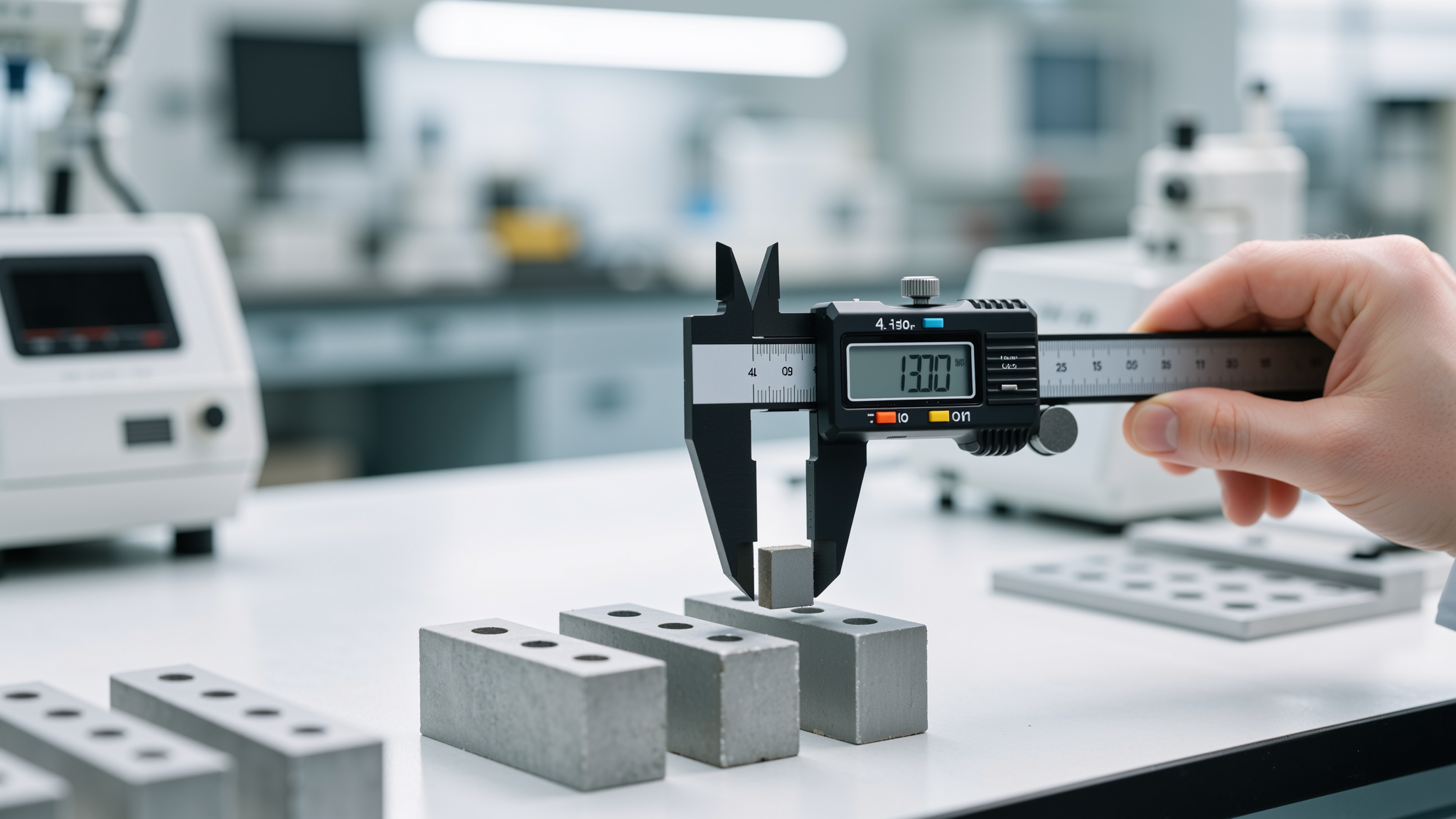
Build your checklist around the specific product, but every home hardware inspection should cover these categories. Visual inspection: surface finish consistency, color match to approved sample, absence of scratches, pits, or plating blisters. Dimensional check: critical measurements against engineering drawings with calibrated tools — thread sizes, mounting hole spacing, overall length and width.
Functional testing: operate moving parts through full cycle counts (faucet handles: 50,000 cycles; door hinges: 100,000 cycles; switch toggles: 10,000 cycles minimum). Material verification: XRF analysis for metal composition, glow-wire test for electrical plastic parts, water pressure test for plumbing fittings. Packaging and labeling: correct markings, barcodes scannable, packaging survives drop test from specified height, all required compliance marks present and legible.
Building Long-Term Quality Systems
How can importers build a sustainable quality management system with their suppliers?
Quality is not a one-time inspection — it is a relationship built on clear expectations and continuous feedback. Start by creating a detailed product specification document that covers materials, dimensions, finishes, performance requirements, packaging, and labeling. Both parties sign it, and it becomes the reference for every inspection.
Establish a defect classification system: critical defects (safety hazards), major defects (functional failure or significant appearance issues), and minor defects (cosmetic issues that do not affect function). Define acceptable AQL levels for each category in your purchase agreement. Track defect rates order over order — a supplier whose defect rate trends downward is investing in quality; one whose rate stays flat or increases is cutting corners.
Finally, invest in communication. Visit your key suppliers at least annually, share your market feedback — both positive and negative — and involve them in solving quality problems rather than simply rejecting shipments. Suppliers who understand your market requirements and quality expectations will prioritize your orders and flag potential issues before they become shipment blockers.